Which Clematis Group Do I Have? How to Tell
Clematis is a beloved perennial vine that adds beauty and elegance to gardens with its stunning blooms and lush foliage. However, with over 300 species and numerous hybrids, identifying which Clematis group you have can be challenging. Knowing your Clematis group is essential for proper care, pruning, and ensuring optimal growth. Let’s dive into how to identify your Clematis group and the specific care each requires.
Understanding Clematis Groups
Clematis is categorized into three main groups based on their flowering habits and pruning requirements. Each group has distinct characteristics, making it easier to determine how to care for your plant. Here’s a quick overview of the groups:
- Group 1: Early bloomers that flower on old wood.
- Group 2: Bloomers that flower on both old and new wood.
- Group 3: Late bloomers that flower primarily on new wood.
Group 1: Early Bloomers
Group 1 Clematis typically blooms in early spring and includes varieties like Clematis montana and Clematis alpina. These plants produce flowers on previous year’s growth, so they require minimal pruning.
Identification Tips:
- Flowers appear in early spring.
- Look for large blooms that are often cup-shaped or bell-shaped.
- Growth habit is usually vigorous and can cover large areas quickly.
Care Instructions:
- Prune only after flowering to maintain shape and encourage growth.
- Provide support, as they are climbers and will need something to cling to.
- Ensure well-draining soil and moderate watering.
Group 2: Versatile Bloomers
Group 2 includes varieties like Clematis ‘Nelly Moser’ and ‘The President.’ These plants bloom in late spring on old wood and again in late summer on new growth, offering a longer flowering period.
Identification Tips:
- Blooms typically appear in May to June and again in late summer.
- Flowers can be large and showy, often with a star-like shape.
- Leaves are usually healthy and lush, indicating good care.
Care Instructions:
- Prune lightly in late winter or early spring, cutting back to healthy buds.
- Ensure a balanced fertilizer to promote both old and new growth.
- Provide adequate moisture, especially during the growing season.
Group 3: Late Bloomers
Group 3 includes many popular varieties such as Clematis ‘Jackmanii’ and ‘Sweet Autumn.’ These plants bloom on the current season’s growth, making them easier to manage in terms of pruning.
Identification Tips:
- Flowers appear from mid-summer to fall.
- Look for clusters of blooms that can be small to large, depending on the variety.
- Growth is typically robust and can be quite vigorous.
Care Instructions:
- Prune back to the ground in late winter or early spring to encourage new growth.
- Provide strong support as they can grow quite tall and heavy.
- Fertilize in early spring with a high-nitrogen fertilizer.
How to Identify Your Clematis Group
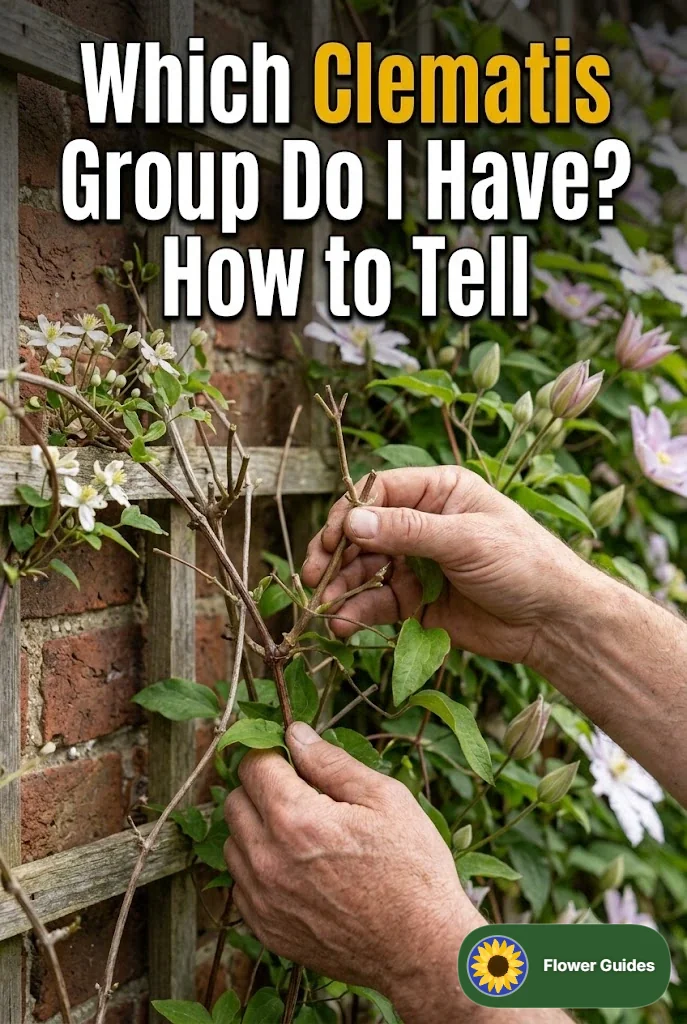
Determining which group your Clematis belongs to requires careful observation and a little knowledge about its flowering habits. Here’s a step-by-step approach to help you identify your Clematis group:
1. Observe the Flowering Time
Note when your Clematis blooms. Early spring flowers suggest Group 1, while blooms appearing in late spring or summer indicate Group 2 or Group 3.
2. Examine the Flower Shape and Size
Look closely at the flowers. Group 1 typically has bell-shaped blooms, Group 2 features large star-shaped flowers, and Group 3 presents clusters of various shapes.
3. Check the Growth Habit
Determine if your Clematis is a vigorous grower or more compact. Group 1 and Group 3 often have vigorous growth, while Group 2 can vary.
4. Inspect the Pruning Needs
Consider how you have pruned your Clematis in the past. If you only trimmed lightly or not at all, it may be Group 1. If you’ve pruned heavily and it rebloomed, it could be Group 2 or 3.
Pinterest-Style Ideas for Clematis Vines
Once you’ve identified your Clematis group, consider these ideas to showcase your beautiful vines:
- Vertical Garden: Use trellises or arbors to create stunning vertical displays.
- Container Planting: Plant in decorative pots for a charming patio display.
- Color Combinations: Pair different Clematis varieties for a colorful garden tapestry.
- Garden Arches: Create a breathtaking entrance with arches draped in flowering vines.
- Mixed Borders: Combine with other perennials for a layered garden effect.
Expert Tips for Healthy Clematis
To ensure your Clematis thrives, consider these expert tips:
- Mulching: Apply a layer of mulch to retain moisture and suppress weeds.
- Watering: Water deeply but infrequently to encourage strong root growth.
- Sunlight: Most Clematis varieties prefer full sun but appreciate some afternoon shade.
- Pest Control: Keep an eye out for pests like aphids and spider mites; treat early to prevent damage.
Common Questions About Clematis Groups
What is the best time to prune my Clematis?
Pruning time depends on the group. Group 1 should be pruned right after flowering, while Group 2 should be pruned lightly in early spring. Group 3 can be pruned back to the ground in late winter.
Can I grow Clematis in containers?
Yes! Many Clematis varieties thrive in containers as long as they have sufficient support and are watered regularly.
How do I encourage more blooms on my Clematis?
Regular fertilization, proper pruning, and ensuring adequate sunlight and moisture will help promote more blooms.
Conclusion
Identifying which Clematis group you have can significantly enhance your gardening experience and plant care. By understanding the specific needs of each group, you can enjoy vibrant blooms year after year. Whether it’s a stunning display on a trellis or a charming container arrangement, your Clematis can be the highlight of your garden. Embrace the beauty of these versatile vines and watch your garden flourish!