Why Won’t My Wisteria Bloom? It Can Take Years
Wisteria is a stunning flowering vine that can transform any garden into a picturesque oasis. With its cascading blooms and sweet fragrance, it’s no wonder many gardeners dream of cultivating this beauty. However, if your wisteria isn’t blooming, it can be disheartening. There are several reasons why your wisteria may be taking its sweet time to show off its glorious flowers. Let’s dive into the common culprits and how you can coax your wisteria into blooming.
Understanding Wisteria Blooming
Wisteria is known for its vigorous growth and beautiful clusters of flowers, but it’s also notorious for its unpredictable blooming habits. While some varieties bloom in the spring, others may not flower until summer or even fall. A well-cared-for wisteria can take between 3 to 15 years to bloom, depending on the species, growing conditions, and care practices. Knowing what influences flowering will help you encourage your plant to bloom sooner.
Common Reasons Why Wisteria Doesn’t Bloom
- Age of the Plant: Young wisteria plants often take several years to mature before they produce flowers. If your plant is under three years old, patience is key.
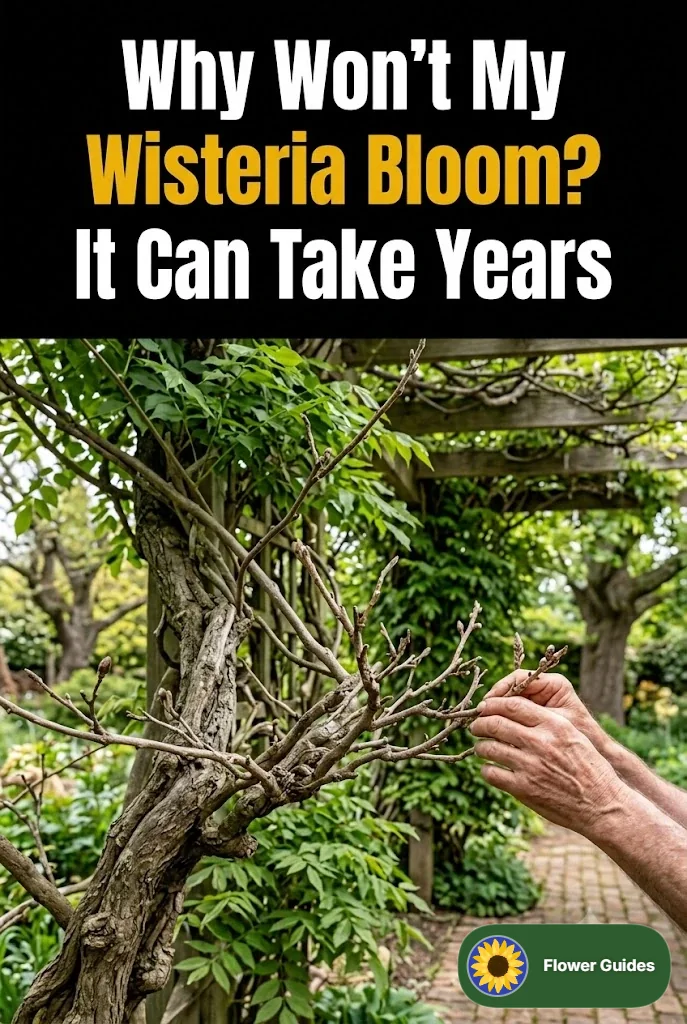
- Improper Pruning: Pruning at the wrong time can inhibit blooming. It’s best to prune wisteria in late winter or early spring, removing last year’s growth to encourage new blooms.
- Insufficient Sunlight: Wisteria thrives in full sun. If your plant is in a shaded area, it may not receive the energy it needs to produce flowers.
- Poor Soil Conditions: Nutrient-deficient, overly compact, or poorly draining soil can hinder blooming. Wisteria prefers well-draining, fertile soil.
- Over-Fertilization: While wisteria needs nutrients, too much fertilizer—especially high nitrogen—can lead to lush foliage at the expense of flowers.
How to Encourage Wisteria to Bloom
1. Choose the Right Variety
Different types of wisteria bloom at different ages and conditions. For instance, Wisteria sinensis typically blooms earlier than Wisteria floribunda. Research the variety you have to understand its blooming habits better.
2. Ensure Adequate Sunlight
Place your wisteria in a location where it can bask in at least 6 to 8 hours of direct sunlight each day. If your plant is not thriving in its current spot, consider relocating it to a sunnier area.
3. Pruning Techniques
Proper pruning is essential for blooming. Follow these steps for effective pruning:
- During late winter, cut back last year’s growth to about 1-2 buds from the main stem.
- In the summer, after the blooms have faded, trim back any long shoots to maintain shape and promote new growth.
4. Soil Amendments
Test your soil to ensure it has a balanced pH (around 6.0 to 7.0) and is rich in organic matter. Adding compost or well-rotted manure can improve soil structure and fertility.
5. Fertilization Practices
Use a balanced fertilizer, but be cautious with nitrogen-heavy products. A slow-release fertilizer designed for flowering plants can promote blooming without excessive foliage growth. Apply it in early spring and again after blooming.
Pinterest-Style Ideas to Inspire Your Wisteria Journey
- Wisteria Trellis Design: Create a stunning focal point by constructing a decorative trellis for your wisteria to climb.
- Wisteria in Containers: Consider growing wisteria in pots for a portable splash of color on patios or balconies.
- Companion Planting: Plant annuals like nasturtiums or perennials like daylilies nearby to enhance visual appeal and encourage pollinators.
- Seasonal Displays: Decorate around your wisteria with seasonal flowers and foliage to create a vibrant garden scene.
- Photography Opportunities: Position seating areas near your wisteria for perfect photo ops during blooming season.
Expert Tips for Promoting Wisteria Blooms
For those looking to take their wisteria care to the next level, consider the following tips:
- Patience is Key: Understand that wisteria is a long-term commitment. Some varieties may take longer to bloom, and that’s perfectly normal.
- Support Structures: Ensure your wisteria has a sturdy support structure, as heavy blooms can weigh down branches, affecting their ability to flower.
- Monitor Watering: While wisteria prefers consistent moisture, avoid overwatering. Let the soil dry slightly between waterings to prevent root rot.
Common Questions About Wisteria Blooming
Why is my wisteria only producing leaves?
If your wisteria is growing lush leaves but no flowers, it may be too young, receiving too much nitrogen, or not getting enough sunlight. Adjust your care routine accordingly.
How long does it take for wisteria to bloom?
Wisteria can take anywhere from 3 to 15 years to bloom, depending on the variety and growing conditions.
Can I force my wisteria to bloom sooner?
While you can encourage blooming through proper care, it’s essential to be patient. Forcing bloom could damage the plant.
Should I prune my wisteria every year?
Yes, pruning annually helps maintain its shape and promotes more vigorous blooming.
Conclusion
Understanding why your wisteria may not bloom can lead to more fruitful gardening endeavors. By addressing factors like sunlight, soil health, and proper pruning techniques, you can help your wisteria thrive. Remember, gardening is a journey of patience and learning, so enjoy the process and look forward to the day when your wisteria bursts into bloom.