How to Harvest Dill Without Killing the Plant
Harvesting dill can be a rewarding experience, as this fragrant herb adds a fresh flavor to many dishes. However, many novice gardeners worry that cutting back their dill will damage or kill the plant. The good news is that with the right techniques, you can enjoy a bountiful harvest while ensuring your dill continues to thrive. Let’s explore the best practices for harvesting dill without harming the plant.
Quick Answer
To harvest dill without killing the plant, cut only the outer leaves and flower heads, leaving the inner leaves intact. This encourages new growth and prolongs the plant’s life. Always use clean, sharp scissors for precise cuts.
Understanding Dill Growth
Dill, known for its feathery leaves and delicate flowers, is an annual herb that can grow up to three feet tall. It thrives in warm weather and well-drained soil. Understanding its growth cycle is essential to maximize your harvest without damaging the plant.
Growth Stages of Dill
- Seedling Stage: Dill starts as a small seedling, typically germinating within 10 to 14 days.
- Vegetative Stage: The plant begins to grow feathery leaves, which are the most commonly harvested part.
- Flowering Stage: Dill produces small yellow flowers, which can also be harvested for their seeds.
Best Time to Harvest Dill
Harvesting at the right time is crucial for maintaining the health of your dill. Here are some tips to determine when to harvest:
Leaf Harvesting
- Harvest dill leaves when the plant is around 8 to 10 inches tall.
- Choose the outer leaves, as these are the most mature and flavorful.
- Harvest in the morning after the dew has dried for the best flavor.
Flower and Seed Harvesting
- Wait until the flowers have fully opened before harvesting.
- For seeds, wait until the flower heads turn brown and dry.
How to Harvest Dill Without Killing the Plant
To ensure your dill plant continues to flourish, follow these steps for a successful harvest:
Step-by-Step Harvesting Process
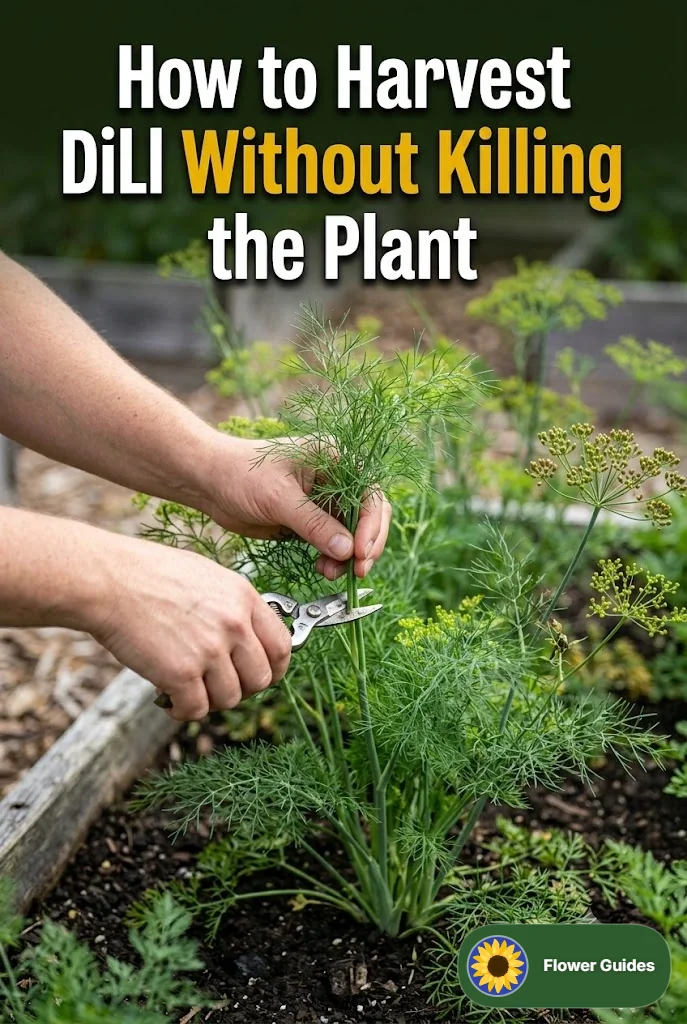
- Gather Your Tools: Use clean, sharp scissors or garden shears to make precise cuts.
- Choose the Right Leaves: Look for the most mature outer leaves and avoid cutting the central stem or inner leaves.
- Make the Cut: Cut the leaves at the base, close to the stem, ensuring you leave at least a third of the plant intact.
- Harvest Flowers and Seeds: If you’re harvesting flower heads, cut them when they are fully bloomed. For seeds, wait until they are brown and dry.
Tips for Maintaining Plant Health
- Avoid Over-Harvesting: Only take what you need to prevent stress on the plant.
- Water Regularly: Keep the soil moist but not waterlogged to support continued growth.
- Fertilize Sparingly: Too much fertilizer can encourage rapid growth, which may weaken the plant.
Common Mistakes to Avoid
Even experienced gardeners can make errors when harvesting dill. Here are some common pitfalls to watch out for:
- Cutting Too Much: Avoid cutting more than a third of the plant at once, which can lead to stunted growth.
- Ignoring the Central Stem: Cutting the central stem or inner leaves can kill the plant.
- Harvesting Late in the Season: Late harvesting can lead to tougher leaves and reduced flavor.
Pinterest-Style Ideas for Using Dill
Once you’ve harvested your dill, consider these exciting ideas for utilizing this versatile herb:
- Dill-Infused Oil: Combine fresh dill with olive oil for a flavorful dressing or marinade.
- Dill Pickles: Use dill to make your own homemade pickles, enhancing their flavor with fresh herbs.
- Dill Potato Salad: Add dill to your potato salad for a refreshing twist that will impress guests.
- Dill Sauce for Fish: Mix dill with yogurt, lemon, and garlic for a delicious sauce that complements grilled fish.
Expert Tips for Thriving Dill Plants
Here are some insider tips to ensure your dill plants stay healthy and productive throughout the growing season:
- Companion Planting: Dill grows well with cucumbers, beans, and cabbage, which can enhance their growth.
- Preventing Bolting: To prevent your dill from flowering too soon, provide consistent watering and avoid stressing the plant.
- Succession Planting: Plant dill every few weeks for a continuous supply throughout the summer.
Common Questions About Harvesting Dill
When is the best time to harvest dill?
The best time to harvest dill is in the morning after the dew has dried, when the flavor is at its peak.
Can I harvest dill throughout the growing season?
Yes, you can harvest dill throughout the season, but be mindful to avoid taking too much at once.
How can I preserve harvested dill?
You can preserve dill by drying it, freezing it in ice cube trays with water, or making dill-infused oil.
Conclusion
Harvesting dill is a simple yet rewarding task that can enhance your culinary creations while keeping the plant healthy. By following the right techniques and avoiding common mistakes, you can enjoy fresh dill all season long. So grab your scissors, and let your dill thrive while you savor its delightful flavor!