How to Apply Diatomaceous Earth in the Garden Correctly
If you’re looking for a natural and effective way to protect your garden from pests while enriching the soil, diatomaceous earth (DE) might just be the solution you need. This fine, powdery substance is made from the fossilized remains of tiny aquatic organisms and can be a game-changer in your gardening routine. However, applying it correctly is crucial to ensure that you maximize its benefits while minimizing any potential drawbacks. Let’s dive into the best practices for using diatomaceous earth in your garden.
What is Diatomaceous Earth?
Diatomaceous earth is a natural pesticide that works by dehydrating soft-bodied insects like aphids, slugs, and even some types of beetles. It’s composed of silica and is safe for plants, pets, and humans when used properly. Understanding how to apply it can help you maintain a healthy, thriving garden.
Quick Answer
To apply diatomaceous earth in your garden correctly, sprinkle a thin, even layer on the soil or plants when the conditions are dry. Make sure to reapply after rain or watering, and avoid using it in windy conditions to prevent it from blowing away.
When to Use Diatomaceous Earth
Timing is essential for the effective use of diatomaceous earth. Here are some ideal scenarios:
- During Pest Infestations: Apply DE when you notice an increase in pest activity.
- As a Preventative Measure: Use it at the beginning of the growing season to deter pests early on.
- After Rain or Watering: Reapply after significant moisture to maintain its effectiveness.
How to Apply Diatomaceous Earth
Applying diatomaceous earth correctly involves a few simple steps. Here’s a detailed guide to help you get started:
Step 1: Choose the Right Type
Not all diatomaceous earth is created equal. Make sure to select food-grade diatomaceous earth for gardening purposes. This type is safe for plants and animals, unlike pool-grade DE, which contains added chemicals.
Step 2: Prepare the Area
Before applying DE, ensure the area is dry. Wet conditions can hinder its effectiveness, as moisture makes it less abrasive to insects. If you’ve recently watered or it has rained, wait until the soil and plants are dry.
Step 3: Apply Evenly
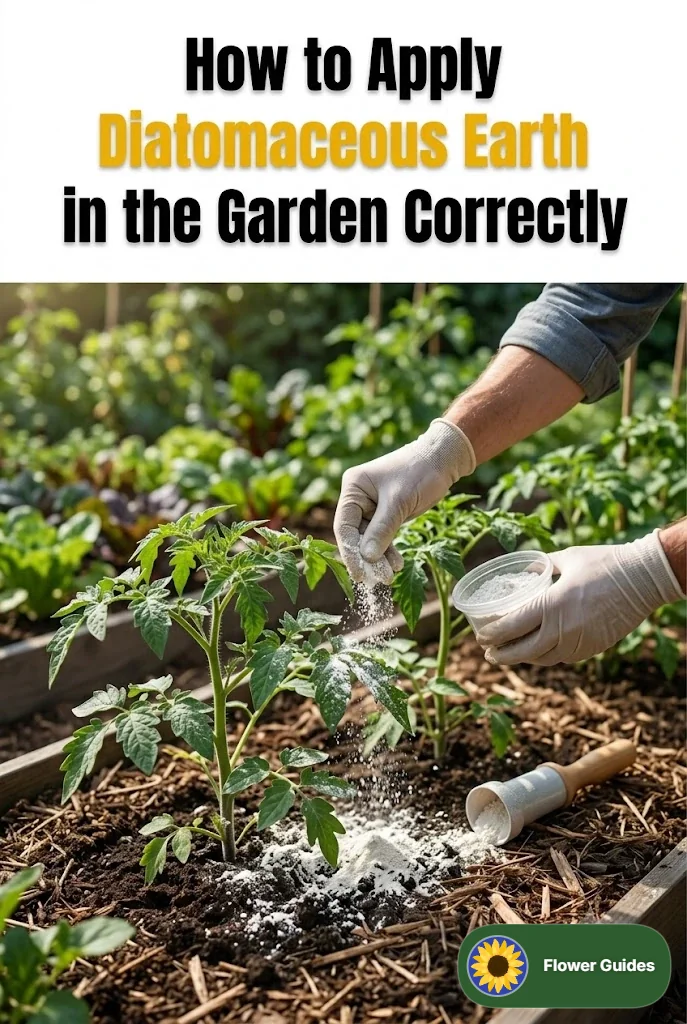
When applying diatomaceous earth, use a dust applicator or a sieve to create a fine, even layer. Aim for a light dusting rather than a thick coating. Here’s how:
- Sprinkle a thin layer on the soil around your plants.
- Apply it directly to the foliage, especially on the undersides of leaves where pests tend to hide.
- Focus on areas where you’ve noticed pest activity.
Step 4: Reapply as Necessary
Diatomaceous earth can lose its effectiveness when it gets wet. Therefore, it’s essential to reapply after rain or watering. Regular checks on your garden will help you determine when it’s time to refresh the DE layer.
Pinterest-Style Ideas for Using Diatomaceous Earth
Here are some creative and visual ideas for incorporating diatomaceous earth in your gardening routine:
- DIY Pest Barrier: Create a perimeter of diatomaceous earth around your garden beds to keep crawling pests at bay.
- Indoor Plant Protection: Dust the soil of your houseplants with DE to prevent infestations without harming your plants.
- Compost Enrichment: Mix diatomaceous earth into your compost pile to help control odors and improve drainage.
- Natural Flea Control: Use DE in areas where pets frequent to help manage fleas naturally.
Expert Tips for Maximum Effectiveness
Here are some insider tips to make the most of diatomaceous earth:
- Use in Dry Conditions: Apply DE during dry weather to enhance its effectiveness.
- Avoid Windy Days: Wind can blow away the powder, reducing its application in your garden.
- Combine with Other Methods: For optimal pest control, consider using DE alongside other organic gardening practices.
Common Mistakes to Avoid
To ensure you’re using diatomaceous earth properly, steer clear of these common pitfalls:
- Applying Wet DE: Never apply diatomaceous earth when the area is wet, as its effectiveness diminishes.
- Using Too Much: A light dusting is sufficient; over-application can harm beneficial insects.
- Ignoring Reapplication: Failing to reapply after rain or watering can leave your plants vulnerable to pests.
Frequently Asked Questions (FAQ)
1. Is diatomaceous earth safe for pets and humans?
Yes, food-grade diatomaceous earth is safe for pets and humans when used properly. Avoid inhaling the dust, as it can be irritating to the lungs.
2. How often should I apply diatomaceous earth?
Reapply diatomaceous earth after every rain or watering and check for pest activity regularly to maintain its effectiveness.
3. Can I use diatomaceous earth on vegetables?
Absolutely! Diatomaceous earth is safe to use on vegetables, but avoid applying it just before harvest to ensure no residue remains.
Conclusion
Diatomaceous earth can be a powerful ally in your gardening arsenal when applied correctly. By following these steps and tips, you can protect your plants from pests while promoting a healthier garden environment. Embrace the benefits of this natural product, and watch your garden thrive!